How to Open a Brokerage Account No Minimum Deposit
June 24, 2026 18 min read 3,524 words
Unlock the world of investing without upfront capital, making financial growth accessible to everyone.
Start Investing Now
Demystifying No-Minimum Deposit Brokerage Accounts for Beginners
 Photo: Mikhail Nilov / Pexels
For many aspiring investors, the idea of needing a substantial sum of money to even begin investing has been a significant barrier. Historically, brokerage firms often imposed minimum deposit requirements, sometimes ranging from hundreds to thousands of dollars, effectively shutting out individuals with limited capital. This created a perception that investing was an exclusive club, accessible only to the wealthy. However, the financial landscape has undergone a dramatic transformation in recent years, largely driven by technological advancements and a growing demand for financial inclusivity. Today, the concept of a 'no minimum deposit brokerage account' has become a reality, democratizing access to the stock market and other investment vehicles. This paradigm shift means that virtually anyone, regardless of their current financial standing, can now take the crucial first step towards building wealth and securing their financial future.
But what exactly does 'no minimum deposit' entail, and why is it such a game-changer? Simply put, it means you can open an investment account without having to transfer a specific, predetermined amount of money into it to activate or maintain it. While you will eventually need to deposit *some* money to actually purchase investments, the initial hurdle of a large upfront sum is completely removed. This flexibility is particularly beneficial for new investors who might be hesitant to commit a large amount of capital without first understanding the intricacies of the market or for those who are simply starting with a very tight budget. It allows for a gradual entry into investing, enabling individuals to deposit small, manageable amounts as they learn and grow their confidence. This approach significantly lowers the entry barrier, making investing less intimidating and more approachable.
The rise of these accessible accounts is not just a marketing gimmick; it reflects a fundamental shift in the brokerage industry. Many modern online brokers have embraced a commission-free trading model and leveraged technology to reduce operational costs, allowing them to cater to a broader client base. They understand that today's small investor could be tomorrow's substantial client, and by fostering early engagement, they build long-term relationships. This trend is also fueled by the increasing popularity of fractional share investing, which allows investors to buy a portion of a single share of a company, rather than being forced to purchase an entire, potentially expensive, share. For instance, if a stock costs $1,000 per share, fractional investing allows you to buy $10 worth of that stock, owning 0.01 shares. This innovation, coupled with no minimum deposit accounts, means that even with just a few dollars, you can begin to build a diversified portfolio.
Choosing to open a brokerage account with no minimum deposit is more than just a practical financial decision; it's an empowering one. It signifies that the power of compounding and long-term wealth creation is no longer reserved for a select few. It enables individuals to start their investment journey sooner, taking advantage of time in the market, which is often considered one of the most critical factors in successful investing. This accessibility also encourages financial literacy, as new investors are prompted to learn about different asset classes, market dynamics, and personal financial planning. It's a stepping stone towards greater financial independence and a more secure future, proving that big financial goals can start with very humble beginnings. Understanding the implications and benefits of these accounts is the first step towards leveraging them effectively for your personal financial growth.
Learn more about investment strategies for beginners.
Key Features and Benefits of No-Minimum Brokerage Accounts
 Photo: Leeloo The First / Pexels
Beyond the obvious benefit of not requiring a large upfront sum, brokerage accounts with no minimum deposit offer a suite of features and advantages that cater specifically to the modern investor, especially those just starting out. One of the most significant benefits is the psychological barrier reduction. The idea of needing thousands of dollars to invest can be daunting, leading to procrastination or a complete abandonment of investment goals. By removing this barrier, these accounts encourage immediate action, allowing individuals to start small and gradually increase their contributions as their comfort level and financial capacity grow. This 'start small, grow big' approach is incredibly effective for developing consistent saving and investing habits, which are crucial for long-term financial success. It transforms investing from a distant, unattainable goal into an achievable, ongoing process.
Another crucial feature often associated with these accounts is access to fractional shares. As mentioned, fractional shares allow investors to buy a portion of a share, rather than the whole thing. This is particularly impactful when considering high-priced stocks from companies like Amazon, Google, or Tesla, where a single share can cost hundreds or even thousands of dollars. Without fractional shares, an investor with only $50 might feel limited to penny stocks or less desirable options. With fractional shares, that same $50 can buy a piece of a blue-chip company, allowing for greater diversification even with limited capital. This means that a beginner investor can build a portfolio that mirrors that of a seasoned investor, albeit on a smaller scale, and benefit from the same growth potential of established companies. This feature alone revolutionizes how small investors can approach portfolio construction and risk management.
Furthermore, many brokers offering no-minimum accounts also provide commission-free trading for stocks, ETFs, and sometimes even options. This means that when you buy or sell these assets, you don't pay a fee for each transaction. While some might argue that commission fees were relatively small in the past, for an investor making frequent small trades or investing very small sums, these fees could quickly erode profits or even make investing unprofitable. The elimination of commissions significantly reduces the cost of investing, making it more efficient for those who are regularly contributing small amounts. This allows more of your money to go directly into investments, rather than being siphoned off by trading costs, thereby accelerating your wealth accumulation over time.
These platforms are also typically designed with user-friendliness in mind. Recognizing that their target audience includes many first-time investors, brokers with no-minimum accounts often offer intuitive mobile apps and web interfaces, simplified dashboards, and educational resources. They aim to make the investment process as straightforward and understandable as possible, reducing the learning curve. This can include access to research tools, market news, and even guided investment paths or robo-advisors for those who prefer a more hands-off approach. The emphasis is on empowering the investor, providing them with the tools and knowledge needed to make informed decisions, regardless of their prior experience. This comprehensive support system ensures that even with a modest start, investors have the resources to grow their financial literacy and portfolio effectively.
Finally, the flexibility these accounts offer extends to investment options. While some might assume that no-minimum accounts come with limited choices, many top-tier brokers provide access to a wide array of investment products. This can include individual stocks, exchange-traded funds (ETFs), mutual funds, bonds, and even cryptocurrencies, depending on the platform. This broad selection allows investors to tailor their portfolios to their specific risk tolerance, financial goals, and personal values. Whether you're interested in growth stocks, dividend income, or socially responsible investing, a no-minimum account can serve as your gateway. This versatility ensures that as your financial knowledge and capital grow, your brokerage account can evolve with you, without the need to switch platforms or incur additional setup costs. The combination of low entry barriers, diverse investment options, and robust educational support makes these accounts an indispensable tool for anyone looking to embark on their investment journey.
Choosing the Right Broker: What to Look for in a No-Minimum Account
 Photo: Alesia Kozik / Pexels
While the allure of opening a brokerage account with no minimum deposit is strong, not all platforms are created equal. The market is saturated with options, and making an informed choice is crucial for a successful investment journey. Your selection should go beyond just the 'no minimum' aspect and delve into the specifics of what each broker offers, aligning it with your personal investment goals, risk tolerance, and learning style. The right broker can be a powerful partner in your wealth-building efforts, while the wrong one can lead to frustration and missed opportunities. Therefore, a thorough evaluation process is highly recommended before committing.
Firstly, consider the investment products available. While many brokers offer stocks and ETFs, your long-term strategy might involve other assets. Do you want access to mutual funds, bonds, options, or even cryptocurrencies? Some platforms specialize in certain areas, while others offer a broader spectrum. For instance, if you're interested in building a diversified portfolio with low-cost index funds, ensure the broker offers a wide selection of ETFs or mutual funds with low expense ratios. If you envision exploring more complex strategies down the line, check if the platform supports options trading or other derivatives. The breadth and depth of investment options directly impact your ability to diversify and adapt your portfolio as your financial knowledge and market conditions evolve. It's better to choose a platform that can grow with you rather than needing to transfer assets later.
Secondly, evaluate the fee structure beyond just commissions. While commission-free trading is standard for many stocks and ETFs, other fees can still apply. Look out for account maintenance fees, inactivity fees, transfer fees, or fees for certain types of transactions (e.g., options contracts, mutual fund loads). Some brokers might charge for real-time market data or advanced research tools. These seemingly small fees can add up over time, especially for investors making small, frequent contributions. A transparent fee schedule is a hallmark of a trustworthy broker. Always read the fine print in the terms and conditions to avoid any unpleasant surprises. Understanding the full cost of ownership for your brokerage account is just as important as the initial 'no minimum' promise.
Compare different brokerage fees before deciding.
Thirdly, consider the quality of the trading platform and user experience. For new investors, an intuitive, easy-to-navigate interface is paramount. Look for platforms with clear dashboards, simple order entry processes, and readily accessible account information. Many brokers offer mobile apps, which can be incredibly convenient for managing your investments on the go. Test out demo accounts if available to get a feel for the platform before committing. Beyond ease of use, consider the availability of educational resources. Does the broker offer articles, webinars, tutorials, or investment guides? Access to quality educational content can significantly accelerate your learning curve and help you make more informed decisions. A broker that invests in educating its clients is often one that genuinely cares about their financial success.
Finally, customer support and security are non-negotiable. Even the most experienced investors occasionally need assistance. How responsive and knowledgeable is the customer support team? Do they offer multiple contact channels (phone, email, chat)? Check reviews and ratings regarding their customer service. Equally important is the security of your funds and personal information. Ensure the broker is regulated by the appropriate authorities (e.g., FINRA, SEC in the US) and that your account is protected by the Securities Investor Protection Corporation (SIPC), which insures up to $500,000 in securities and cash in case the brokerage firm fails. Strong encryption, two-factor authentication, and other security measures are also vital. Choosing a broker with robust security protocols provides peace of mind, allowing you to focus on your investment goals without worrying about the safety of your assets. By carefully weighing these factors, you can select a no-minimum deposit brokerage account that not only meets your current needs but also supports your long-term financial aspirations.
Strategies for Maximizing Your No-Minimum Investment Account
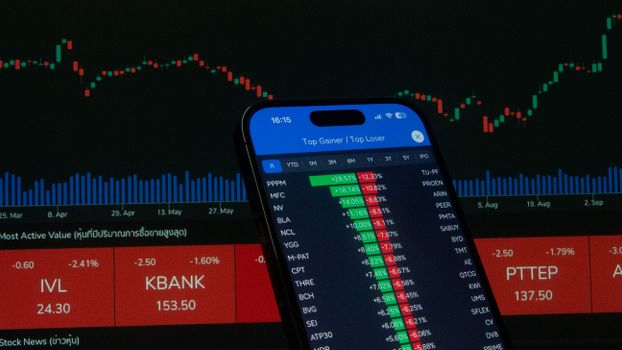 Photo: StockRadars Co., / Pexels
Opening a brokerage account with no minimum deposit is a fantastic first step, but the real work and rewards come from how you manage and grow that account. Even with small contributions, strategic planning can lead to significant wealth accumulation over time. The key is to leverage the accessibility of these accounts to establish consistent habits and make informed decisions, rather than viewing them as just a casual entry point. Here are some effective strategies to maximize the potential of your no-minimum investment account:
**1. Embrace Consistent, Small Contributions:** The power of compounding is most effective when applied consistently over long periods. Even if you can only afford to invest $5, $10, or $25 per week or month, make it a regular habit. Set up automatic transfers from your checking account to your brokerage account. This 'set it and forget it' approach ensures that you're continually adding to your investments, taking advantage of dollar-cost averaging. Dollar-cost averaging means you invest a fixed amount of money at regular intervals, regardless of market fluctuations. This strategy helps reduce risk by averaging out your purchase price over time, as you buy more shares when prices are low and fewer when prices are high.
**2. Focus on Diversification, Even with Fractional Shares:** While you might start with a small capital, don't put all your eggs in one basket. Utilize fractional shares to diversify across different companies, industries, or asset classes. Instead of buying $50 worth of a single stock, consider buying $10 worth of five different stocks or ETFs. Exchange-Traded Funds (ETFs) are particularly excellent for diversification, as a single ETF can hold hundreds or thousands of underlying stocks or bonds. This instant diversification helps mitigate risk and exposes your portfolio to a broader range of growth opportunities, even with limited funds.
**3. Prioritize Low-Cost Index Funds or ETFs:** For beginners, low-cost index funds or ETFs are often the best starting point. These funds track a specific market index (like the S&P 500) and offer broad market exposure with minimal expense ratios. They are passively managed, meaning lower fees compared to actively managed mutual funds, and historically have provided solid long-term returns. By investing in these, you're essentially betting on the overall growth of the economy rather than trying to pick individual winning stocks, which can be challenging for even seasoned investors.
**4. Reinvest Dividends:** If your investments pay dividends, ensure that your account is set up to automatically reinvest them. Reinvesting dividends means that any cash payouts from your investments are used to buy more shares or fractional shares of the same investment. This accelerates the compounding process, as your dividends start earning their own dividends, leading to exponential growth over the long term. Many brokers offer this as a default or optional setting, and it's a powerful, passive way to boost your returns.
**5. Educate Yourself Continuously:** The investment world is constantly evolving. Take advantage of the educational resources provided by your broker and other reputable financial sources. Understand the basics of market cycles, risk management, asset allocation, and different investment vehicles. The more you learn, the more confident and informed your investment decisions will become. Start by understanding the companies you're investing in or the underlying assets of your ETFs. Financial literacy is an ongoing journey that directly contributes to your success as an investor.
**6. Be Patient and Resist Emotional Decisions:** Investing is a long-term game. Market fluctuations are normal, and it's crucial to resist the urge to panic sell during downturns or chase hot stocks during upturns. Stick to your investment plan, maintain a long-term perspective, and avoid making emotional decisions based on short-term market noise. Time in the market, not timing the market, is often the most effective strategy for wealth creation. Your no-minimum account is a tool for building future wealth, not for getting rich quick.
By implementing these strategies, your no-minimum deposit brokerage account can become a powerful engine for financial growth, proving that you don't need a fortune to start building one.
